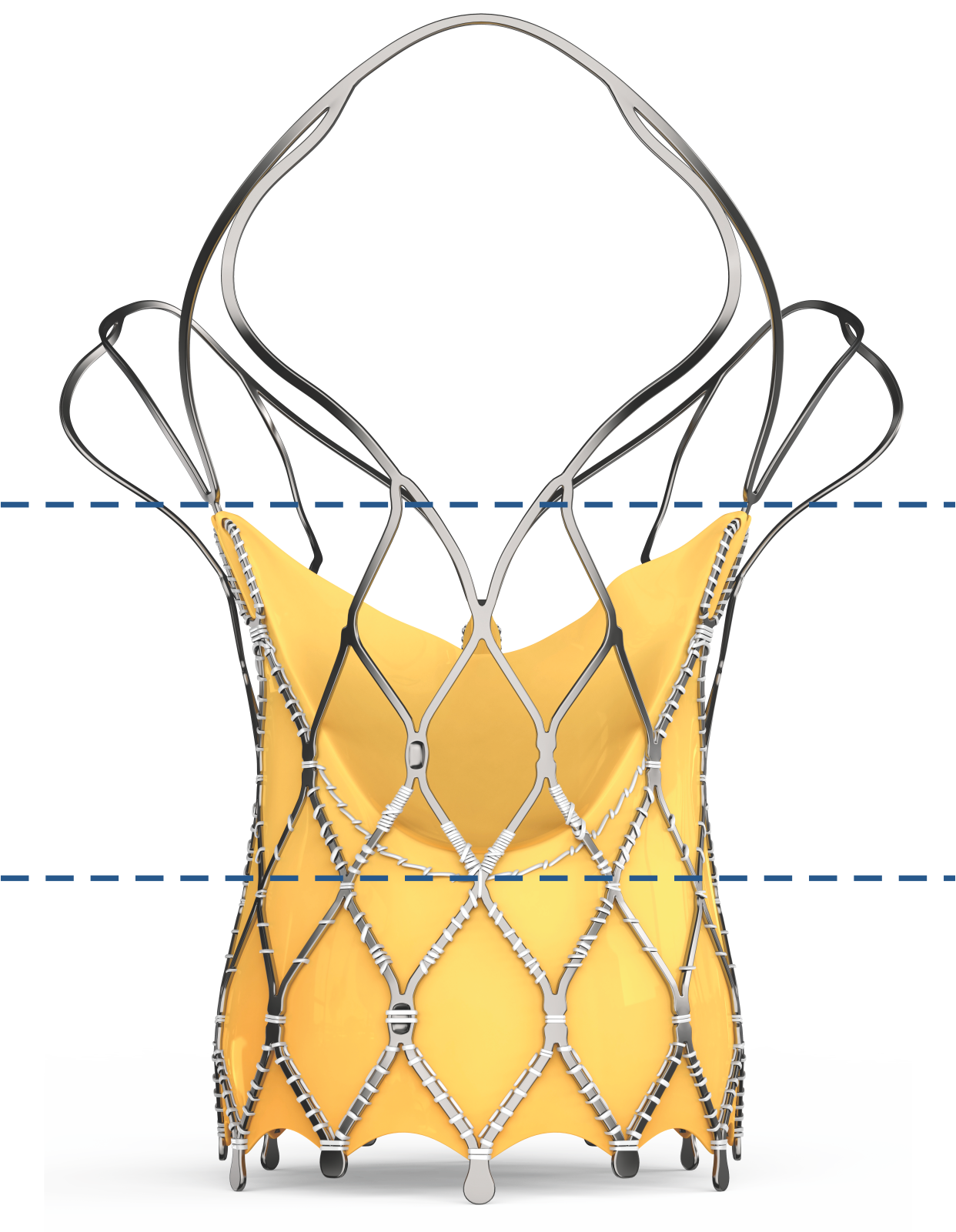
Three-zone adaptive frame.
A flexible outflow conforms to the aorta, the mid-frame supports bioprosthesis geometry, and the inflow provides radial strength for annular anchoring.


STRUCTURAL HEART · TAVI
Manufacturer: Vascular Innovations Co., Ltd. · SMT group
Adaptive frame.
Controlled implantation.Supra-annular technology and a three-zone nitinol frame. A platform that can be recaptured up to 80% of deployment.*
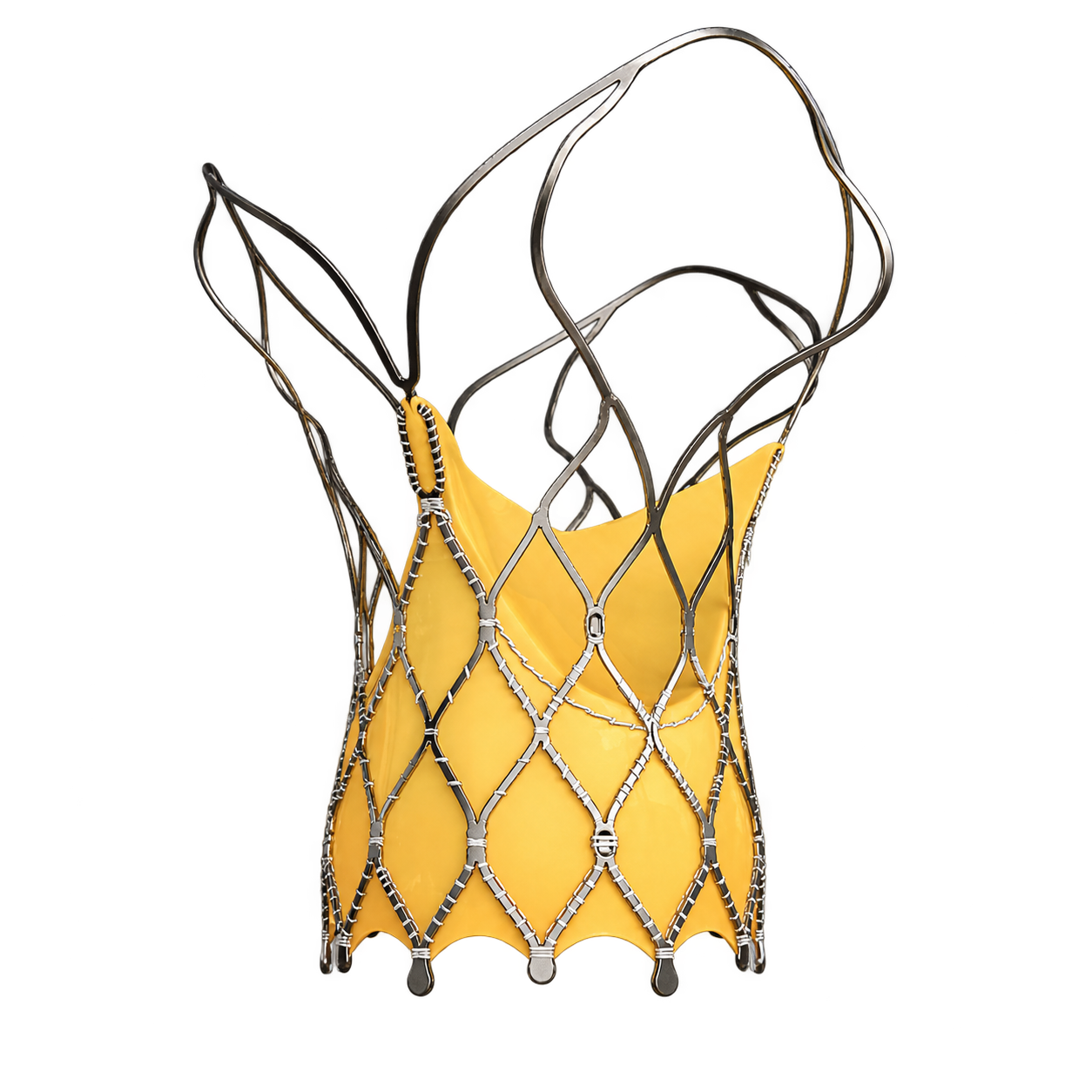
THE HYDRA VALVE
The supra-annular design combines bovine pericardial leaflets with a self-expanding frame featuring differentiated mechanical properties and optimal immediate and late hemodynamic performance.
A flexible outflow conforms to the aorta, the mid-frame supports bioprosthesis geometry, and the inflow provides radial strength for annular anchoring.
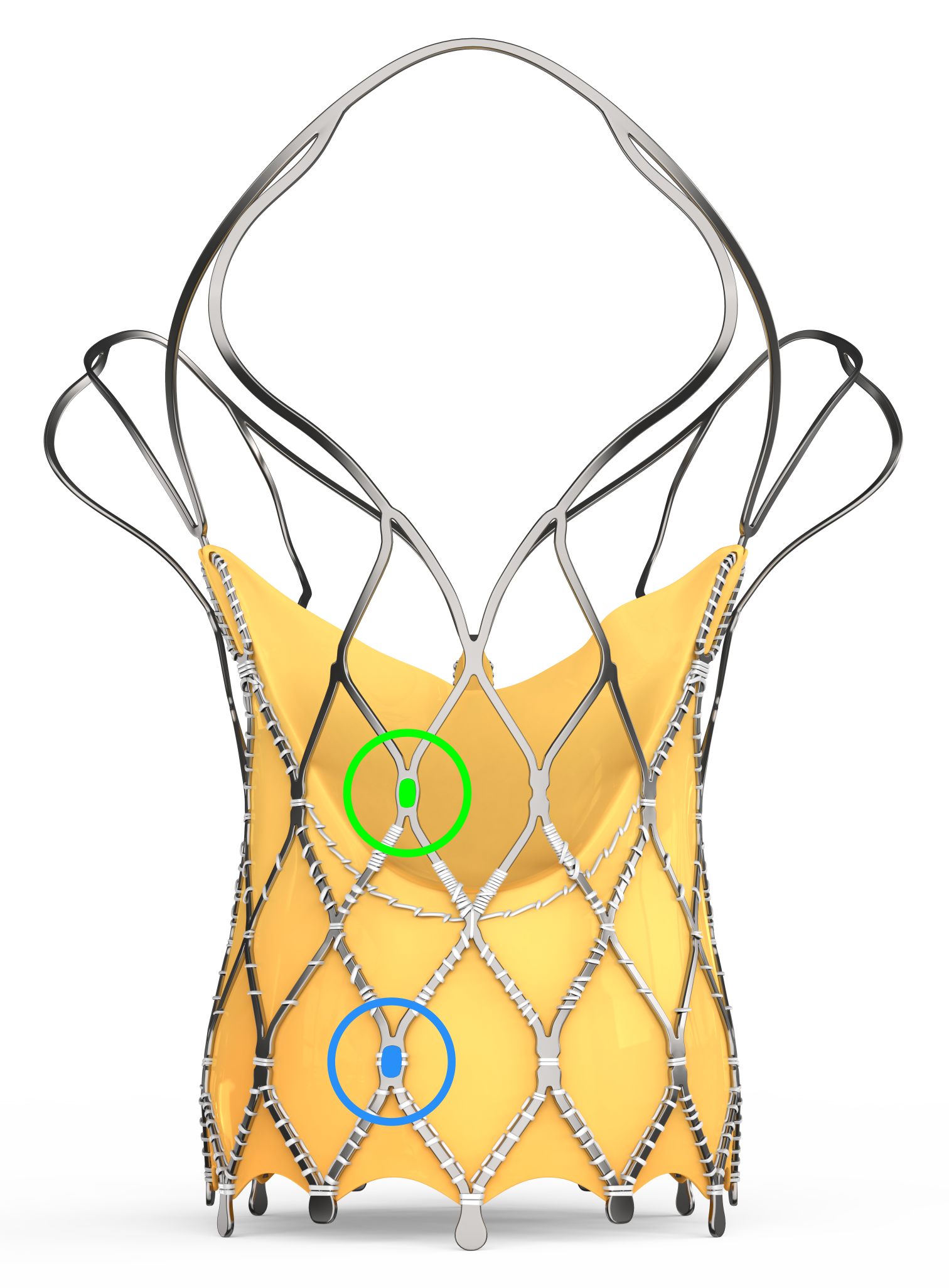
Two rows of radiopaque markers provide references for implantation depth and leaflet deployment. Commissural orientation is described in the dedicated case report.
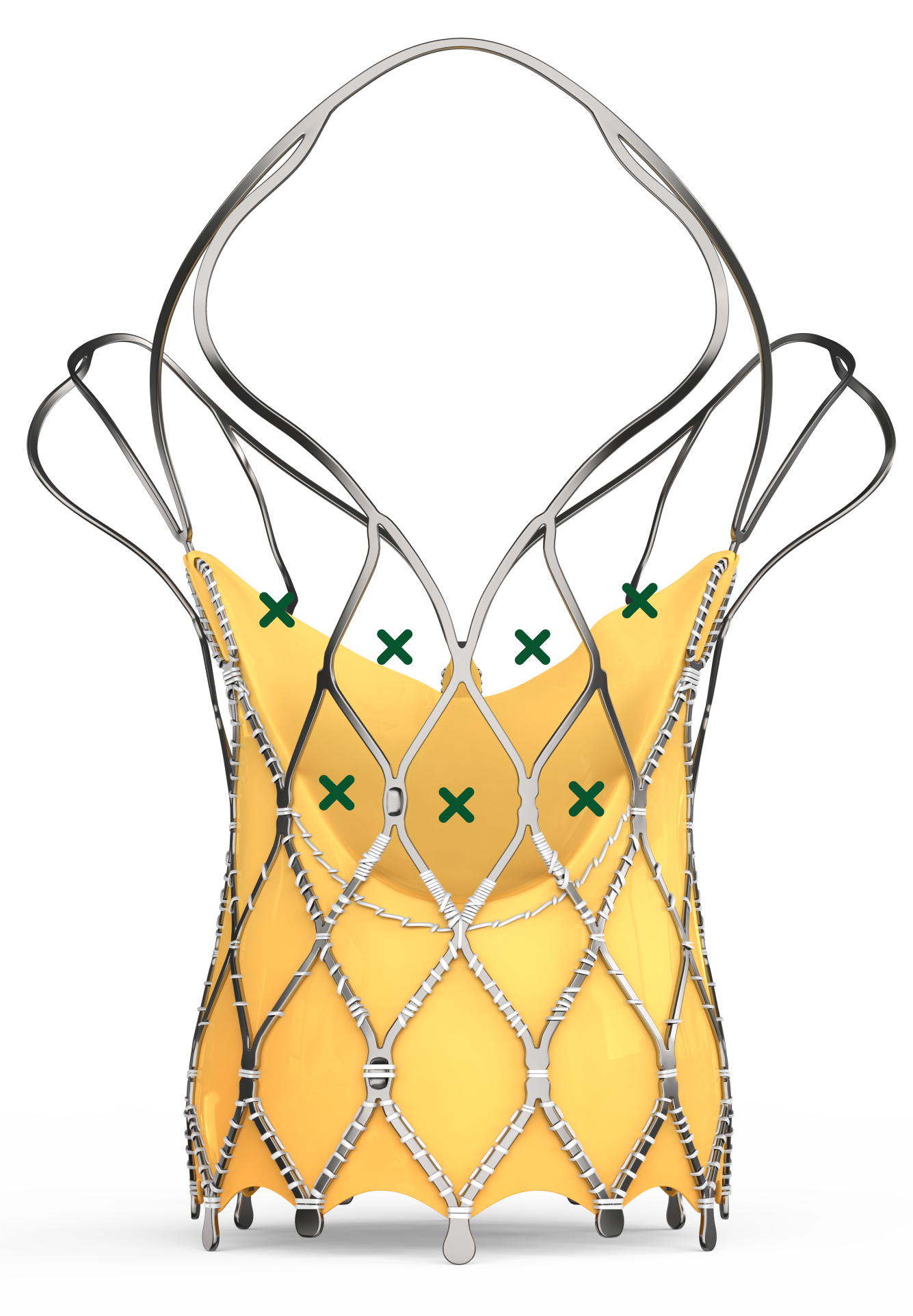
Trillium technology and the open geometry of the upper cells, with a minimum opening of 15 F, are designed to facilitate coronary reaccess.
*Recapture and repositioning up to 80% of deployment. Features and limitations depend on the configuration used: refer to the applicable instructions for use.
DELIVERY SYSTEM EVOLUTION
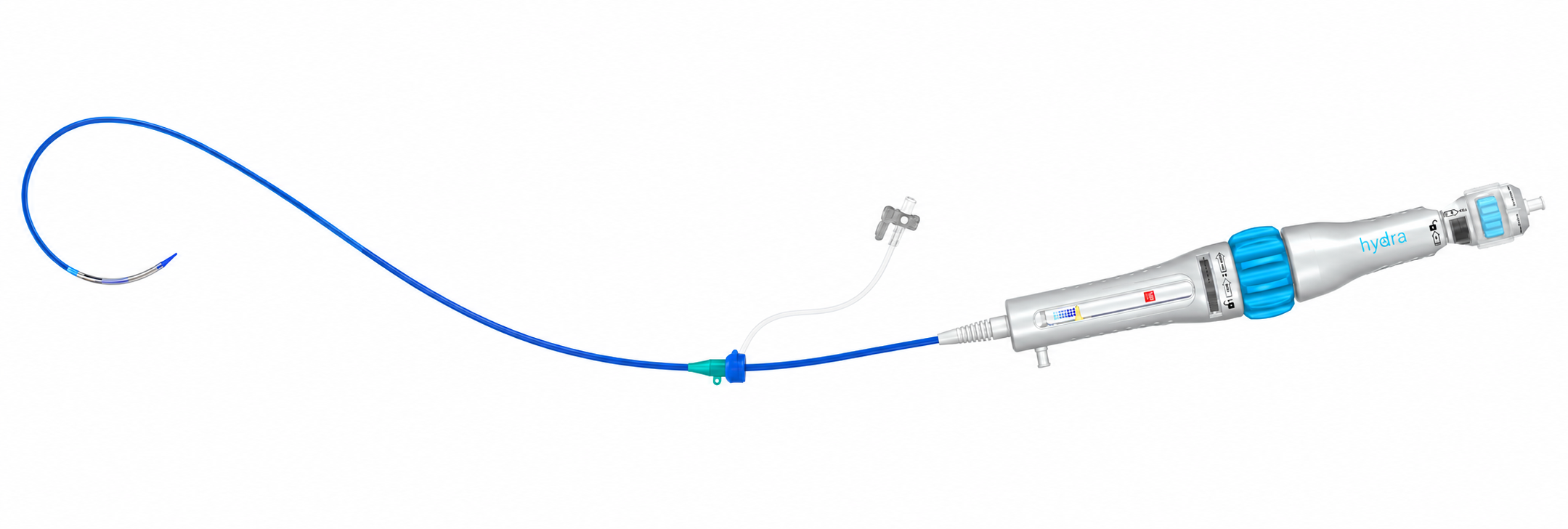
The braided capsule increases back-up support during THV tracking and control during deployment while maintaining high flexibility. The integrated 45 cm in-line sheath increases system stability during implantation.
The redesigned handle and knob offer a wider grip and require fewer rotations for deployment.
Watch the new delivery system ↗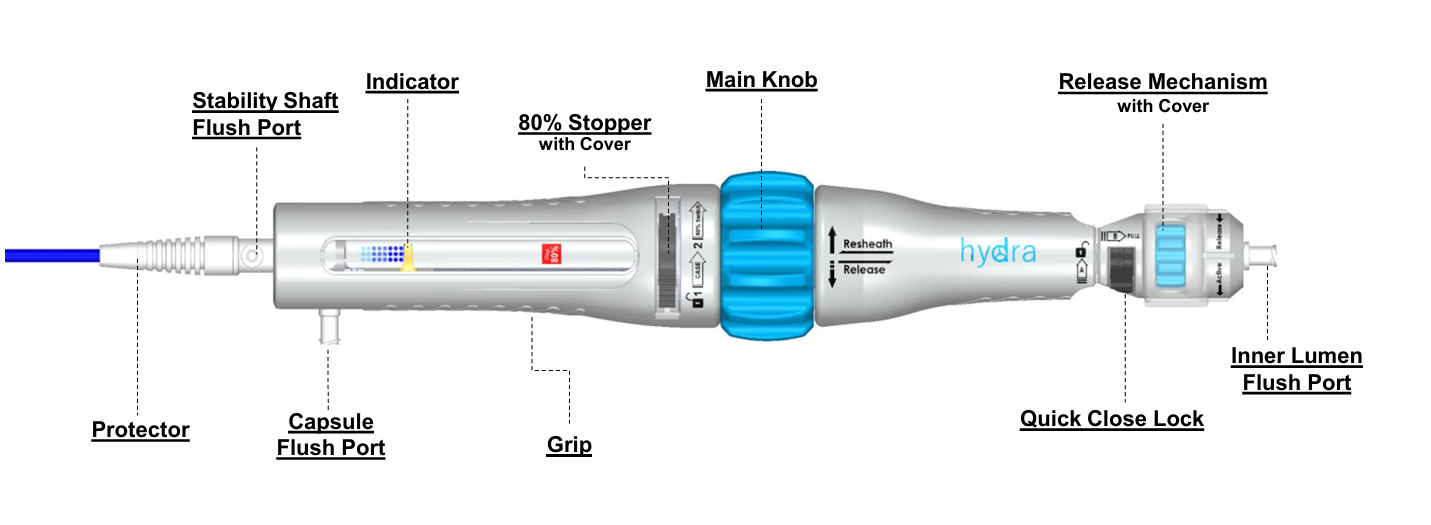
A checkpoint before final deployment to assess implantation depth and haemodynamics.
A dedicated control manages final deployment of the frame extensions, adding a specific control at the final stage.
Rapid capsule advancement helps prepare the system for withdrawal.
CLINICAL EVIDENCE / PUBLICATIONS
HYDRA CE, GENESIS and GENESIS-II: haemodynamic and safety outcomes in the cohorts studied.
54 patients from 2 European centres, a subgroup of the 157-patient HYDRA CE cohort. Prospective, multicentre, single-arm study.
At 5 years: all-cause mortality 24.3%, cardiovascular mortality 6.0%; mean gradient 8.0 ± 3.14 mmHg; effective orifice area 2.09 ± 0.57 cm². New pacemaker implantation 16.7%. No structural valve deterioration was observed in this subgroup.
Bajoras et al. · Catheter Cardiovasc Interv. 2026;107:1782–1790.
DOI: 10.1002/ccd.70536
40 patients, 19 centres in India. Prospective, multicentre, non-randomised study of HYDRA with active release.
Device success 95%. At 6 months: all-cause mortality 5.0%, cardiovascular mortality 2.5%; mean gradient 8.7 ± 3.3 mmHg and effective orifice area 1.9 ± 0.4 cm². The abstract reports new pacemaker implantation in 7.9%.
Sonawane et al. · Indian Heart J. 2026;78:201–205.
DOI: 10.1016/j.ihj.2026.03.004
40 patients at high surgical risk, 19 centres in India. Prospective, multicentre, non-randomised study.
Device success 95%; cardiovascular mortality 2.5%. Mean gradient 8.4 ± 4.0 mmHg; effective orifice area 1.9 ± 0.6 cm². New pacemaker: 3/40 (7.5%), or 7.9% among patients without a baseline pacemaker.
Senguttuvan et al. · AsiaIntervention. 2025;11:155–163.
DOI: 10.4244/AIJ-D-24-00075
54 patients from 2 European centres, selected from the HYDRA CE cohort for extended follow-up.
At 3 years: all-cause mortality 14.8%, cardiovascular mortality 3.7%; mean gradient 8.6 ± 2.80 mmHg and effective orifice area 1.97 ± 0.52 cm². New pacemaker implantation 12.9%.
Bajoras et al. · Catheter Cardiovasc Interv. 2025;105:292–300. Published online in 2024.
DOI: 10.1002/ccd.31285
157 patients, 18 centres in Europe and Asia-Pacific. Prospective, multicentre, single-arm study with independent event adjudication.
Successful implantation in 94.3%. All-cause mortality: 7.0% at 30 days and 14.6% at 1 year. Moderate/severe PVL: 6.3% and 6.9%; new pacemaker: 11.7% and 12.4%. Mean gradient at 30 days was 8.1 ± 3.7 mmHg.
Aidietis et al. · JACC Cardiovasc Interv. 2022;15:93–104.
DOI: 10.1016/j.jcin.2021.09.004
40 patients, 11 centres in India. Prospective, multicentre, single-arm study in patients at high or extreme surgical risk.
Device success 92.5%. All-cause mortality: 10.0% at 30 days and 17.5% at 6 months. New pacemaker implantation 7.5% at 30 days. At 6 months: mean gradient 7.6 ± 2.7 mmHg; no PVL greater than mild was reported.
Chandra et al. · Catheter Cardiovasc Interv. 2021;98:371–379.
DOI: 10.1002/ccd.29733
EOA: effective orifice area. PVL: paravalvular leak. Data from the respective publications at the specified follow-up. Follow-up reports from the same cohort do not represent independent populations. Single-arm or non-randomised studies do not provide a direct comparison with other valves. GENESIS-II evaluates the active release mechanism; configurations and study periods may differ from earlier studies. Refer to the IFU for indications and safety information. Bibliography checked on 17 October 2026.
CLINICAL EXPERIENCE AND TRAINING
Clinical cases, imaging and demonstrations of the new delivery system. Select a video to play it on this site.
Marker orientation and coronary reaccess after HYDRA implantation. The case by Buono et al., published in EuroIntervention.
Implantation with recapture and post-dilatation in the case presented at CSC Estructural 2024.
HYDRA aortic valve-in-valve replacement without contrast in a patient with severe chronic kidney disease. The case report by Ielasi et al., published in Cardiovascular Revascularization Medicine.
Ielasi A, Buono A, Briguglia D, Uccello G, Pellicano M, Medda M, Tespili M. Cardiovasc Revasc Med. 2023;49:73–74. DOI: 10.1016/j.carrev.2022.08.020.
Read the publication ↗Cases document individual experiences. Clinical videos and delivery demonstrations are presented as separate categories; the instructions for use remain the reference for device use.
GISE 2026 · THE CATH LAB RELOADED
47TH GISE CONGRESS · 2026
Comments following “The Cath Lab Reloaded” symposium at the 47th GISE Congress 2026.
The Cath Lab Reloaded
Case reloaded: QFR and Hydra in action in TAVI patient
More operator interviews coming soon.
SIZING
Annular treatment ranges and bioprosthesis dimensions.
Product images from the manufacturer's original materials. Dimensions and TEE ranges from brochure HYDRA/BRO/EN01 REV.03, “Size Matrix”, page 8. Refer to the applicable IFU for sizing.
ORDERING INFORMATION
| Product code | Size |
|---|---|
| HYDRA22 | 22 mm |
| HYDRA26 | 26 mm |
| HYDRA30 | 30 mm |
DOCUMENTATION
Brochures, sizing diagrams and technical references.
Prosthesis dimensions and anatomical recommendations from the technical document.
SMT / Vascular Innovations · HYDRA/BRO/EN01 REV.03 · ©2022
Buono et al. · EuroIntervention · 2022
Features and documentation in structural heart.
TRAINING AND SUPPORT
HYDRA system information, product training and technical support for your TAVI team.
Contact the EUKON team ↗